
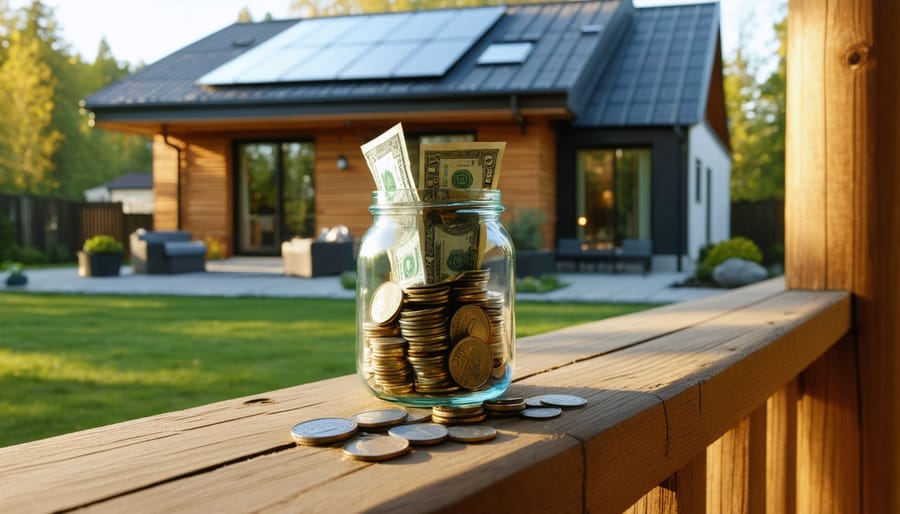
Stop before considering a payday loan for solar installation. While you can get $700 here, borrowing $700 at typical payday loan rates (400% APR or higher) creates a debt trap that undermines the very financial freedom solar energy promises. A $700 payday loan can balloon to over $1,000 in just months through rollover fees and interest—money better invested in your clean energy future.
Solar installations typically cost $15,000-$25,000, making payday loans woefully inadequate and financially destructive for this purpose. The math is straightforward: payday lenders expect repayment within weeks, while solar panel systems require years of structured financing to match the decades of energy savings they provide.
Here’s the encouraging reality: dedicated solar financing options exist specifically designed for homeowners like you, offering zero-down payment plans, low fixed interest rates (3-8% APR), and monthly payments often lower than your current electricity bill. These legitimate programs transform solar from an overwhelming expense into an immediate cash-flow positive investment.
Many homeowners believe they need perfect credit or substantial savings to go solar—two common solar myths that prevent thousands from accessing clean energy annually. Federal tax credits currently cover 30% of installation costs, while solar-specific loans, leases, and power purchase agreements make systems accessible regardless of your financial starting point.
This article guides you through proven solar financing strategies that protect your financial health while delivering energy independence, featuring real success stories from homeowners who transitioned to solar without predatory lending.
The Real Cost of Using Payday Loans for Home Improvements
Why $700 Won’t Cover Your Solar Needs Anyway
A typical residential solar installation ranges from $15,000 to $25,000 before incentives—a substantial investment that requires careful financial planning. While a $700 payday loan might seem like a quick solution for immediate expenses, it falls dramatically short of covering even a fraction of your solar needs.
Payday loans create a dangerous debt trap rather than a viable funding solution. With annual percentage rates often exceeding 400%, these short-term loans are designed to be repaid within weeks, not years. Borrowing $700 at such extreme rates would cost you significantly more in interest payments, while leaving you without the funds needed for actual solar installation.
Consider this real-world perspective: A homeowner who attempted to piece together solar financing through multiple payday loans found themselves paying over $2,000 in interest alone within six months, yet had made zero progress toward their solar goals. This scenario illustrates why understanding the true scope of solar costs is essential before seeking financing.
The encouraging news? Legitimate solar financing options exist specifically designed to bridge this funding gap, offering manageable terms that align with the long-term savings solar energy provides.

The Debt Cycle That Prevents Energy Independence
Many homeowners facing urgent financial needs turn to payday loans with the intention of addressing their energy costs or funding home improvements. However, this decision often creates a counterproductive cycle that pushes sustainable energy goals further out of reach.
Payday loans typically carry annual percentage rates exceeding 400%, meaning a $700 loan can quickly balloon to over $1,000 with fees and interest. When homeowners use these funds for energy-related expenses, they’re forced to allocate future income toward debt repayment rather than investing in long-term solutions like solar panels. Each loan renewal or extension adds more fees, trapping borrowers in a pattern where immediate financial relief transforms into prolonged financial strain.
Consider Sarah, a homeowner who initially borrowed $700 to cover high summer electricity bills. Within six months, she had paid over $900 in fees alone while still owing the original amount. That same $900 could have served as a down payment on a solar financing program with zero upfront costs and immediate energy savings.
The mathematics are clear: payday loan debt diverts resources away from wealth-building investments. Solar panels, by contrast, reduce monthly expenses from day one, creating positive cash flow that accelerates financial freedom rather than diminishing it.
Solar Financing Options That Actually Work
Solar Loans: Own Your System and Your Savings
Solar loans represent a smart, strategic alternative designed specifically for homeowners ready to invest in clean energy. Unlike payday loans with their triple-digit interest rates, solar-specific financing offers competitive rates typically ranging from 3% to 8%, with flexible terms extending up to 25 years.
Here’s what makes solar loans particularly attractive: your monthly loan payment often equals or falls below your current electricity bill. This means you start enjoying the benefits of solar ownership from day one, without stretching your budget. As energy costs continue rising, your fixed loan payment remains stable, creating increasing savings over time.
The ownership advantage cannot be overstated. When you finance solar panels through a dedicated solar loan, you become the system owner, making you eligible for the federal solar Investment Tax Credit (ITC), which currently offers a 30% credit on your total system cost. This substantial benefit significantly reduces your overall investment and accelerates your path to energy independence.
Consider Sarah from Portland, who financed her 8kW solar system with a 15-year loan at 5.9% interest. Her monthly payment of $147 replaced a $165 electric bill, delivering immediate savings while building equity in an asset that will increase your home’s value. Given the impressive solar panel longevity of 25-30 years, she’ll enjoy 10-15 years of virtually free electricity after her loan concludes.
Solar loans transform what seems like a daunting expense into an accessible, wealth-building investment that pays dividends for decades while reducing your environmental footprint.
Solar Leases and Power Purchase Agreements (PPAs)
Solar leases and Power Purchase Agreements (PPAs) offer homeowners an accessible pathway to clean energy without the burden of upfront costs. These arrangements allow you to benefit from solar power by paying only for the electricity your system generates, rather than purchasing the equipment outright.
With solar leases, you make fixed monthly payments to use the solar panels installed on your roof. The leasing company owns and maintains the system, handling all repairs and performance issues. PPAs work similarly, except you pay a per-kilowatt-hour rate for the actual energy produced—typically lower than your utility’s electricity rates.
Both options typically require zero or minimal down payment, making them ideal alternatives to payday loans for homeowners who want immediate solar benefits without substantial upfront investment. Your monthly energy costs often decrease from day one, providing instant savings while you transition to renewable energy.
However, these agreements come with trade-offs compared to solar loans. Since you don’t own the system, you won’t qualify for federal tax credits or state incentives—those benefits go to the system owner. Additionally, lease terms typically span 20-25 years, and transferring the agreement to future homebuyers can sometimes complicate home sales.
The advantages include predictable energy costs, professional system maintenance at no additional charge, and production guarantees that protect you if panels underperform. One California homeowner reduced her electricity bills by 40% through a PPA without spending a dollar upfront, proving that ownership isn’t necessary for substantial savings.
Solar leases and PPAs work best for homeowners seeking immediate cost reduction without long-term financial commitment, while solar loans benefit those who want maximum savings through ownership and available tax incentives.
Home Equity Loans and Lines of Credit
If you own a home and have built up equity, you may have access to one of the most cost-effective solar financing options available. Home equity loans and home equity lines of credit (HELOCs) allow you to borrow against the value you’ve built in your property, typically at interest rates significantly lower than personal loans or credit cards.
For solar installations, these financing tools offer compelling advantages. Interest rates often range from 6-9%, compared to much higher rates on unsecured loans. More importantly, the interest you pay may be tax-deductible if you itemize deductions, making this option even more affordable. When you combine potential interest deductions with federal solar tax credits, your effective cost drops considerably.
Home equity loans provide a lump sum with fixed monthly payments, making budgeting straightforward. HELOCs function more like a credit line, giving you flexibility to draw funds as needed during your solar project. Both options typically offer repayment terms of 10-20 years, spreading costs over time while your solar panels generate immediate energy savings.
Consider the Martinez family from Oregon, who used a HELOC to finance their $18,000 solar installation. With a 7% interest rate and tax-deductible interest, their effective monthly cost was less than their previous electricity bill. Within eight years, they’ll own their system outright while continuing to enjoy reduced energy costs.
This approach transforms your home equity into long-term savings and increased property value, making it a smart financial strategy for qualified homeowners.
Government Incentives and Rebates That Reduce Upfront Costs
One of the most compelling reasons to explore proper solar financing instead of payday loans is the substantial government incentives available to reduce your upfront costs. These programs can significantly decrease the actual amount you need to finance, making solar energy more accessible than many homeowners realize.
The federal Investment Tax Credit (ITC) remains the cornerstone of solar affordability, allowing you to deduct 30% of your total solar installation costs from your federal taxes. For a typical $20,000 residential system, this translates to $6,000 in tax savings, immediately reducing your effective cost to $14,000. This incentive applies to both purchased and financed systems, meaning you benefit regardless of your payment method.
Beyond federal support, many states offer additional rebates and performance-based incentives. These vary by location but can include cash rebates ranging from $500 to $5,000, property tax exemptions that prevent your home’s increased value from raising taxes, and sales tax exemptions on solar equipment purchases. Some utilities also provide net metering programs, crediting you for excess energy your system produces.
Local municipalities often add their own layer of incentives, including expedited permitting processes, reduced permit fees, and special financing programs with favorable terms. These community-level benefits further reduce both your initial costs and ongoing expenses.
When you combine these incentives, the amount requiring financing drops considerably. Consider Maria, a homeowner in Colorado who installed a $25,000 system. After claiming the 30% federal credit ($7,500), a state rebate ($2,000), and utility incentive ($1,500), she only needed to finance $14,000—nearly half the original cost. This demonstrates why understanding available incentives before seeking financing is essential to making informed decisions about solar investment.
Real Homeowners Who Chose Smart Solar Financing
Maria Rodriguez, a homeowner in Phoenix, Arizona, was initially considering a payday loan to cover the upfront costs of solar installation. After learning about the risks and exploring her options, she chose a solar lease program instead. “I was worried about how I’d afford solar panels, but the lease meant zero money down,” Maria explains. Her monthly lease payment is $89, while her electricity bill dropped from $165 to just $22. The net result? Maria saves $54 every month while powering her home with clean energy. Within two years, she’s already saved over $1,200 and avoided the debt trap that a $700 payday loan would have created.
The Thompson family in North Carolina faced a similar decision when their aging HVAC system needed replacement alongside their interest in going solar. Rather than turning to high-interest short-term loans, they secured a solar loan through their installation company at 5.99% APR over 20 years. Their $15,000 system cost them approximately $98 monthly, but their previous electric bills averaged $180. “We’re saving $82 every month from day one,” says David Thompson. “After the loan is paid off, we’ll own the system outright and essentially have free electricity for decades to come.” The family also qualified for the federal solar tax credit, which reduced their total system cost by 30%, making their investment even more valuable.
Both families demonstrate that patient, informed decision-making and appropriate solar financing options deliver genuine savings and long-term benefits—outcomes that payday loans simply cannot provide. Their success stories show that sustainable energy and financial wellness go hand in hand when homeowners choose the right financing path.

How to Qualify for Solar Financing (Even with Imperfect Credit)
Steps to Improve Your Solar Financing Options
Strengthening your financial profile before pursuing solar financing can unlock better rates and terms, making your sustainable energy investment even more rewarding. Start by checking your credit score and addressing any errors on your credit report—even small improvements can significantly impact your financing options. Consider paying down existing high-interest debts to lower your debt-to-income ratio, demonstrating to lenders that you can manage additional payments comfortably.
Building an emergency fund of three to six months’ expenses shows financial stability and prevents the need for costly short-term loans like payday advances. Gather documentation of steady income, tax returns, and recent utility bills to streamline the application process. If your credit needs work, some homeowners successfully improve their scores within six to twelve months through consistent on-time payments.
Don’t hesitate to get pre-qualified with multiple solar financing providers—this helps you understand what’s available without impacting your credit score. Many lenders offer programs specifically designed for various credit levels, and shopping around ensures you find the best fit. Remember, taking time to strengthen your financial position now means lower monthly payments and greater long-term savings on both your solar investment and energy bills.
What to Ask Your Solar Provider About Financing
Before committing to any solar financing option, it’s essential to ask the right questions to protect your investment and ensure you’re making the best financial decision for your household. Start by requesting a complete breakdown of the total cost of ownership over the life of your system. Ask specifically: “What will I pay in total, including all interest and fees?” This number tells the real story beyond attractive monthly payments.
Next, inquire about the interest rate and whether it’s fixed or variable. Understanding how your rate compares to current market averages helps you identify fair terms versus inflated costs. Request details about any prepayment penalties—the freedom to pay off your system early can save thousands in interest.
Warranty coverage deserves careful attention. Ask what’s covered under the manufacturer’s warranty versus the installer’s warranty, and confirm these protections transfer if you sell your home. Many quality providers offer 25-year performance guarantees and 10-year workmanship warranties, giving you peace of mind for decades.
Don’t overlook the “what if” scenarios. Ask: “What happens if I need to move before the loan is paid off?” Understanding your options—whether you can transfer the loan, pay it off from sale proceeds, or have the new buyer assume payments—prevents future complications.
Finally, request documentation of all terms in writing before signing. A reputable solar provider welcomes these questions and provides transparent answers. If a company seems evasive or pressures you to decide quickly, consider it a red flag. The right financing partner invests time in your understanding, ensuring you feel confident about your solar journey.

Making the transition to solar energy doesn’t require risky financial decisions or predatory lending arrangements. While $700 payday loans might seem like a quick solution, they create more problems than they solve, especially for a long-term investment like solar installation. The good news is that solar energy is more accessible than ever through legitimate financing options specifically designed to make clean energy affordable for homeowners and businesses alike.
Whether you choose solar-specific loans with competitive interest rates, power purchase agreements that require no upfront costs, or take advantage of government incentives that significantly reduce your investment, there’s a path forward that protects your financial wellbeing while advancing your sustainability goals. The families and businesses that have successfully transitioned to solar didn’t rely on high-interest payday loans—they explored options tailored to their circumstances and discovered that clean energy was within reach.
Solar Regeneration specializes in helping clients navigate the full spectrum of solar financing solutions. Our team understands that every situation is unique, and we’re committed to finding the approach that aligns with your budget, timeline, and energy goals. Rather than turning to short-term lending that could compromise your financial stability, we invite you to schedule a consultation with our financing specialists. Together, we’ll explore options that make solar energy achievable today while building toward a more sustainable and economically sound tomorrow. Your solar journey begins with informed decisions and the right partners.