
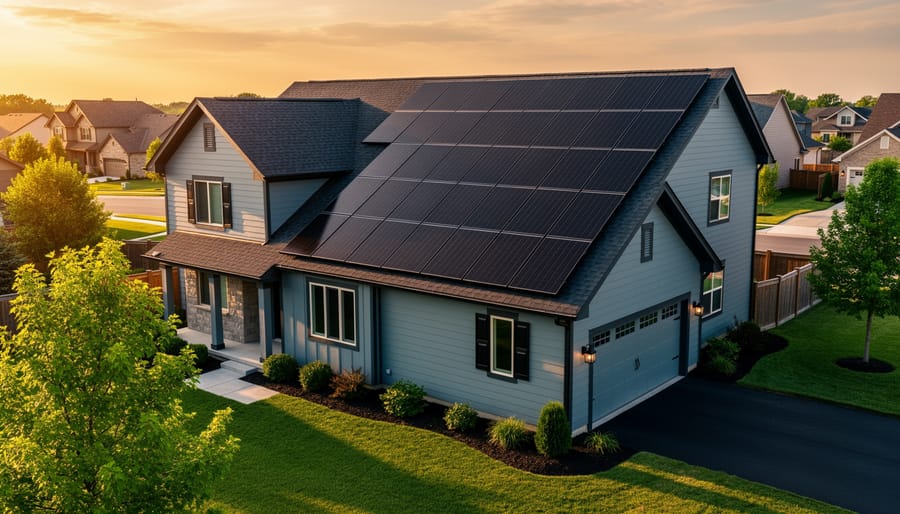
Solar panel installation for a residential home costs between $15,000 and $25,000 on average, translating to $2.50 to $3.50 per watt before incentives. Understanding this investment requires looking beyond the initial price tag to the complete financial picture, including federal tax credits that immediately reduce costs by 30%, state incentives that can add thousands more in savings, and electricity bill reductions averaging $1,500 annually for typical homeowners.
The total investment varies significantly based on your system size, roof characteristics, local labor rates, and equipment quality. A 6-kilowatt system serving an average American household differs substantially from a 10-kilowatt installation powering a larger property with higher energy demands. Geographic location matters considerably, with installation costs in California and Massachusetts trending higher than in Texas or Florida, though higher costs often correlate with more generous state incentive programs.
Most homeowners recover their investment within 7 to 12 years through eliminated or dramatically reduced electricity bills, while solar panels typically function efficiently for 25 to 30 years. This timeline means decades of essentially free electricity after payback, with many families saving $30,000 to $70,000 over the system lifetime. Real-world examples demonstrate even greater returns in areas with expensive utility rates or exceptional sun exposure, where some households achieve payback in just five years.
Making an informed decision requires understanding what drives these costs, how to maximize available incentives, and which factors deliver the best long-term value for your specific situation.
Breaking Down the Average Solar Installation Cost
Equipment Costs vs. Labor Costs
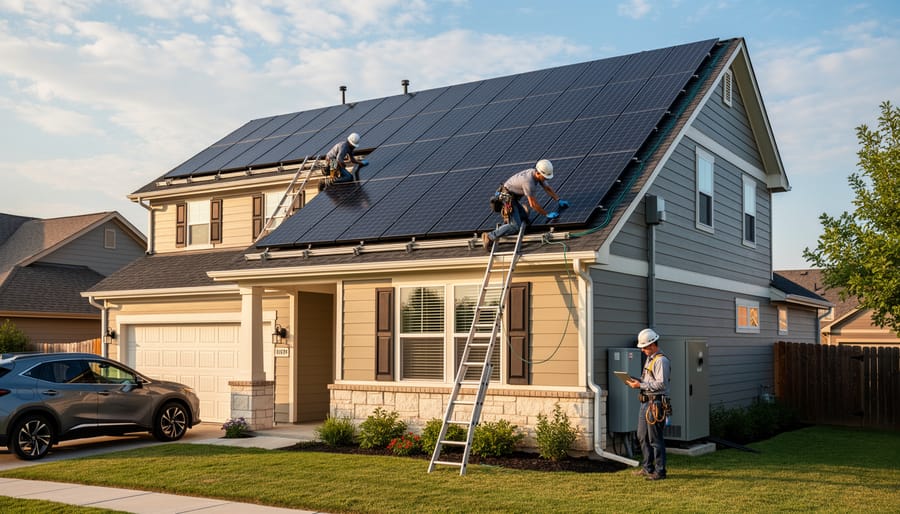
Understanding how your solar investment breaks down between equipment and labor helps you make informed decisions and identify where your money goes. Typically, equipment costs represent approximately 65-70% of your total solar installation expense, while labor, permits, and related services account for the remaining 30-35%.
On the equipment side, solar panels themselves consume about 30-35% of the overall budget, making them the single largest expense. Inverters, which convert the DC electricity your panels generate into usable AC power, account for roughly 10-15% of total costs. Mounting hardware, racking systems, and electrical components collectively represent another 10-15% of your investment. These percentages reflect quality equipment that typically comes with robust warranties—often 25 years for panels and 10-15 years for inverters.
Labor costs, comprising 20-25% of the total, cover the skilled work of certified installers who ensure your system operates safely and efficiently. This includes proper electrical connections, roof penetrations, and system configuration. Permits and inspection fees typically add 3-5% to your total investment, though these vary significantly by location. Some municipalities have streamlined their permitting processes to encourage solar adoption, potentially reducing these costs.
The good news? These upfront investments translate into decades of clean, free electricity. Many homeowners find that understanding this breakdown helps them appreciate the quality and expertise behind their solar system, reinforcing confidence in their decision to switch to renewable energy.
How System Size Affects Your Bottom Line
Your home’s energy consumption directly determines the solar system size you’ll need and, consequently, your total investment. Most residential systems range from 4 to 10 kilowatts (kW), with the average American home requiring a 6-8 kW system to offset typical monthly electricity usage.
Here’s how system size translates to investment: A smaller 4 kW system suitable for modest energy users typically costs between $10,000 and $12,000 after federal tax credits. Medium-sized homes with average consumption need 6-8 kW systems, ranging from $15,000 to $24,000. Larger households with higher energy demands may require 10 kW systems, with costs reaching $28,000 to $32,000.
The relationship is straightforward but encouraging: while larger systems require more upfront investment, they generate proportionally greater electricity savings. A family that installed an 8 kW system in Colorado reported eliminating their $180 monthly electric bill entirely, recouping their investment in just seven years while contributing to a cleaner environment. By accurately assessing your energy needs, you ensure your system size delivers optimal value without overinvesting in unnecessary capacity.
Five Factors That Change Your Installation Price
Your Roof’s Condition and Complexity
Your roof’s characteristics play a significant role in determining your solar installation costs. Older roofs may require reinforcement or replacement before panels can be safely installed, which can add $5,000 to $15,000 to your project budget. However, addressing these needs now ensures your solar system operates efficiently for its entire 25 to 30-year lifespan.
Roof material matters too. Asphalt shingle and metal roofs are typically the most straightforward and cost-effective for installations, while tile or slate roofs require specialized mounting equipment and additional labor, potentially increasing costs by 10 to 20 percent. The angle of your roof affects both installation complexity and energy production. Steep pitches demand extra safety measures and time, while optimal angles maximize solar collection.
Architectural features like multiple roof levels, dormers, or skylights create additional complexity. Installers must work around these elements carefully, which can extend project timelines and increase labor costs by several hundred to a few thousand dollars. Despite these variables, most homeowners find that proper installation on their existing roof structure delivers excellent returns through decades of clean energy production.
Geographic Location and Local Regulations
Your location significantly influences solar installation costs, with regional variations ranging from $2.50 to $3.50 per watt. States with established solar markets like California and Arizona typically offer more competitive pricing due to higher installer availability and streamlined processes. Conversely, emerging solar markets may see elevated costs due to fewer qualified professionals and less infrastructure.
Local permitting and inspection fees add $400 to $1,500 to your total investment, varying by municipality. Some progressive communities have adopted expedited solar permitting programs that reduce both costs and installation timelines, making the transition even more accessible for forward-thinking homeowners.
Climate plays a crucial role in system design and efficiency. Sunnier regions naturally require fewer panels to generate equivalent energy, potentially lowering upfront costs. However, areas with less consistent sunlight can still achieve excellent returns through properly sized systems. For example, the Johnson family in Seattle installed a 7kW system that covers 85% of their annual energy needs despite the region’s cloudy reputation, demonstrating that solar works effectively across diverse climates.
Understanding your region’s incentives, weather patterns, and regulatory environment helps you plan accurately and maximize your investment’s long-term value.
Panel Quality and Technology Type
The type of solar panel you choose significantly impacts your installation costs and long-term performance. Monocrystalline panels represent the premium option, typically costing 15-20% more than alternatives but delivering efficiency ratings of 18-22%. Their sleek black appearance and space-efficient design make them ideal for homes with limited roof space. These panels often come with 25-30 year warranties and maintain performance better over time.
Polycrystalline panels offer a budget-friendly middle ground, with efficiency ratings around 15-17% and lower upfront costs. While they require slightly more space to generate the same power output, they provide excellent value for properties with ample roof area. Many homeowners find these panels deliver strong returns on investment while keeping initial expenses manageable.
Premium thin-film and bifacial options push efficiency boundaries even further, some reaching 23% efficiency or capturing sunlight from both sides. Though these cutting-edge technologies command higher prices, they excel in specific applications like commercial installations or challenging roof orientations. Consider your available space, budget, and energy goals when selecting panel technology. Higher efficiency often means faster payback periods through increased electricity generation, making premium panels a smart long-term investment for many properties.
Energy Storage Addition
Adding battery storage to your solar system represents a significant investment, typically ranging from $8,000 to $15,000 for residential installations. A standard home battery system with 10-13 kWh capacity costs approximately $10,000 to $12,000 after federal tax credits, which also apply to storage paired with solar panels.
Energy storage makes strong financial sense for homeowners in several situations. If you live in an area with time-of-use electricity rates, batteries allow you to store solar energy during the day and use it during expensive peak hours, maximizing your savings. For regions experiencing frequent power outages, battery backup provides invaluable peace of mind and protection for essential appliances. Additionally, homes in states with limited or no net metering programs benefit significantly from storing excess solar production rather than selling it back to utilities at reduced rates.
The mathematics become compelling when you consider that battery systems typically last 10-15 years and can reduce your grid dependence by 80-90 percent. One California homeowner reported saving an additional $1,200 annually after adding storage to their existing solar array, allowing them to avoid peak electricity charges entirely. While the upfront cost is substantial, energy storage enhances your solar investment’s long-term value and energy independence.
The Real Return on Your Solar Investment
Monthly Energy Savings Explained
Understanding your potential monthly savings helps you evaluate solar as a smart financial investment. Let’s look at realistic examples based on common system sizes and regional electricity rates.
A typical 6-kilowatt residential system in California, where electricity costs average $0.27 per kilowatt-hour, can generate approximately 750-900 kilowatt-hours monthly. This translates to savings of $200-$240 on your utility bill each month, or roughly $2,400-$2,880 annually. Over a 25-year system lifespan, that’s between $60,000 and $72,000 in total savings.
In regions with moderate electricity rates like Texas ($0.12 per kilowatt-hour), the same 6-kilowatt system producing 800 kilowatt-hours monthly yields savings of about $96 monthly, or $1,152 annually. While lower than California, these savings still accumulate to approximately $28,800 over the system’s lifetime.
Larger 10-kilowatt commercial systems generate proportionally greater savings. In the Northeast, where rates average $0.18 per kilowatt-hour, businesses can save $270-$360 monthly, significantly reducing operational expenses.
These examples demonstrate how solar panels work as long-term financial assets. Your actual savings depend on your local electricity rates, sun exposure, and energy consumption patterns. Most homeowners achieve full payback within 7-12 years, enjoying decades of essentially free electricity thereafter.
Incentives That Lower Your Actual Cost
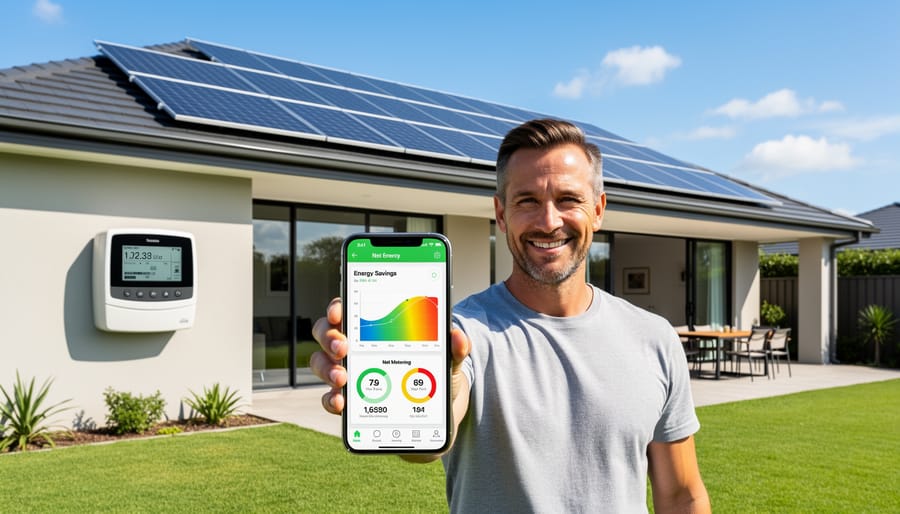
The good news is that solar installation costs significantly less than the sticker price suggests, thanks to attractive financial incentives. The federal Investment Tax Credit (ITC) currently allows you to deduct 30% of your total solar system costs from your federal taxes. For a $25,000 system, that’s an immediate $7,500 reduction in your net investment, bringing your actual cost down to $17,500.
Beyond federal benefits, many states offer additional rebates and performance-based incentives. California homeowners can access the SGIP battery storage rebate, while New York provides incentives through NY-Sun that can reduce costs by an additional $1,000 to $3,000. Massachusetts offers the SMART program with payments based on your system’s energy production over ten years.
Local utility companies often sweeten the deal further with their own rebate programs. Some offer upfront cash rebates ranging from $400 to $1,000, while others provide net metering credits that reduce your monthly electricity bills.
Take the Henderson family in Arizona, who installed a $22,000 solar system. After claiming the 30% federal tax credit and a $1,200 state rebate, their actual investment dropped to $14,200. Combined with eliminated electricity bills, they’re experiencing substantial savings while contributing to a cleaner environment.
When Your System Pays for Itself
Most solar systems pay for themselves within 7 to 12 years, though your timeline depends on several key factors. Homeowners in states with abundant sunshine and high electricity rates often see faster returns, sometimes recovering their investment in just 5 to 6 years. Available incentives significantly accelerate payback—federal tax credits, state rebates, and net metering programs can reduce your effective costs by 30% or more upfront.
Your energy consumption patterns also matter. Families using more electricity during peak sunlight hours maximize their system’s value, while battery storage additions can extend the initial payback period by 2 to 3 years. System efficiency and local utility rates play crucial roles too. The encouraging news: after your system pays for itself, you’ll enjoy decades of essentially free electricity. With most solar panels warranted for 25 years and often lasting 30-plus years, you’re looking at 15 to 20 years of pure savings and energy independence.
How Professional Installation Protects Your Investment
What Certified Solar Professionals Bring to Your Project
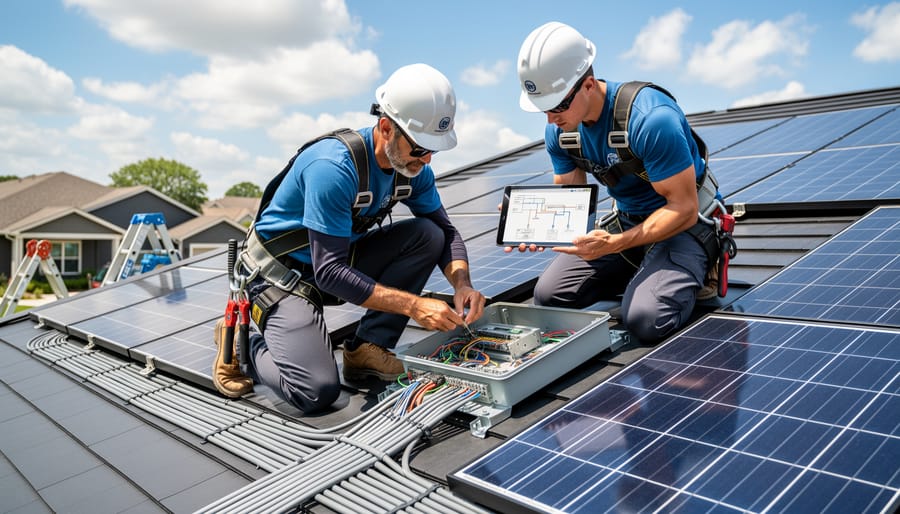
Certified solar professionals bring invaluable expertise that protects your investment and maximizes system performance. These qualified installers possess deep knowledge of system design, ensuring your solar array is optimally sized and positioned for maximum energy production based on your roof’s unique characteristics and local sun patterns.
Their expertise extends to navigating complex permitting processes and local building codes, which can be overwhelming for homeowners tackling installation independently. Professional installers handle all documentation, inspections, and utility interconnection agreements, saving you countless hours and preventing costly compliance mistakes.
Electrical work represents another critical area where certification matters. Licensed solar electricians ensure safe, code-compliant connections between your panels, inverters, and home electrical system. This professional installation provides peace of mind and often comes with warranties that protect your investment for decades.
Beyond technical requirements, certified installers excel at aesthetic integration, positioning panels to blend harmoniously with your home’s architecture while maintaining peak efficiency. Many homeowners report that professionally installed systems exceeded their expectations, with one California family noting their installer’s creative layout preserved their ocean views while generating 95% of their annual electricity needs. This combination of technical precision and thoughtful design ensures your solar system delivers both financial returns and visual appeal.
Warranty Coverage That Matters
Solar warranties provide essential protection for your investment, typically covering three distinct areas. Equipment warranties from manufacturers protect individual components like panels and inverters, usually ranging from 10 to 25 years depending on the product. Solar panels often carry 25-year performance warranties, guaranteeing they’ll maintain at least 80-85% of their original efficiency throughout that period. Inverter warranties typically span 10 to 15 years, though many manufacturers offer extension options.
Workmanship warranties from your installer cover the quality of the installation itself, protecting against leaks, electrical issues, or mounting problems. These typically last between 5 and 10 years, though reputable installers often provide longer coverage. This protection proves invaluable, as proper installation directly impacts your system’s performance and longevity.
Understanding these warranty types helps you evaluate installer proposals and ensure your solar investment remains protected for decades. When comparing quotes, always review warranty terms carefully—comprehensive coverage demonstrates installer confidence and protects your long-term savings potential.
Real Homeowners, Real Savings
Real stories from solar adopters demonstrate the tangible benefits of making the switch to renewable energy. These examples showcase how different property types and energy needs translate into actual costs and measurable savings.
The Martinez family in suburban Phoenix installed a 6.5 kW system on their 1,800-square-foot home in 2022. Their total investment came to $16,250 after the federal tax credit, which covered their three-bedroom home’s average monthly consumption of 850 kWh. Within the first year, they reduced their electricity bills by $1,680 annually. With Arizona’s abundant sunshine and net metering program, the family expects their system to pay for itself in just under ten years. Sarah Martinez notes that their decision was driven equally by financial considerations and environmental responsibility, saying the installation process was surprisingly straightforward and their panels have performed beyond expectations.
For larger properties, the Thompson residence in North Carolina provides an insightful example. This 3,200-square-foot family home required a 10 kW system to offset their 1,400 kWh monthly usage. The installation cost $24,700 after incentives. The Thompsons now save approximately $2,100 per year on electricity costs, and with their state’s additional renewable energy incentives, they’re on track for a twelve-year payback period. Their energy independence has proven especially valuable during peak summer months when their system generates surplus power.
Small business owner Michael Chen installed an 18 kW commercial system on his Sacramento restaurant in 2021. The $43,200 investment after tax credits now saves his business roughly $4,800 annually. Beyond the financial returns, Michael reports that customers appreciate his commitment to sustainability, creating an unexpected marketing advantage. His system is projected to achieve full return on investment within nine years while significantly reducing his business’s carbon footprint.

Getting an Accurate Quote for Your Home
Getting an accurate quote for your solar installation starts with proper preparation and knowing what to expect during the assessment process. Begin by gathering essential information about your home, including recent electricity bills from the past 12 months, details about your roof’s age and condition, and your typical energy consumption patterns. This data helps installers provide precise estimates tailored to your specific needs.
When solar professionals visit your property, they’ll evaluate several factors: your roof’s orientation and angle, shading from nearby trees or structures, available installation space, and your electrical panel’s capacity. Understanding this assessment process empowers you to ask informed questions and ensures nothing gets overlooked.
Prepare a list of important questions for potential installers. Ask about their licensing and certifications, warranty coverage for both equipment and workmanship, expected timeline from consultation to activation, and detailed breakdowns of all costs involved. Inquire about their experience with similar projects and request references from recent customers in your area.
Be aware of red flags that signal potential problems. Avoid companies that pressure you into immediate decisions, offer prices significantly lower than competitors without clear explanation, or hesitate to provide detailed written proposals. Reputable installers welcome questions, provide transparent pricing, and never rush the decision-making process.
Request multiple quotes from at least three qualified installers to compare offerings fairly. Each proposal should include equipment specifications, installation details, financing options, and projected energy production. Remember that the lowest price doesn’t always represent the best value—consider the quality of components, warranty terms, and the installer’s track record. This thorough approach ensures you’ll invest confidently in a solar system that delivers reliable performance and meaningful savings for decades to come.
Investing in solar energy represents a meaningful commitment to both your financial future and environmental sustainability. While the average cost of solar installation may seem substantial initially, the decades of reduced energy bills, increased property value, and environmental impact make it one of the most rewarding investments available to property owners today. Thousands of homeowners and businesses have already discovered that solar panels pay for themselves over time while contributing to a cleaner, more sustainable future.
The key to making an informed decision is understanding your specific energy needs and site conditions. Every property is unique, which is why professional assessment is essential. A qualified solar installation team can evaluate your roof orientation, local climate, energy consumption patterns, and available incentives to provide an accurate cost estimate and projected savings timeline.
Taking the next step is simpler than you might think. Professional Solar Installation Services serve as your partners throughout this transition, handling everything from initial assessment and system design to installation, permitting, and ongoing support. By choosing experienced professionals, you ensure optimal system performance and maximum return on your investment while joining the growing community of forward-thinking property owners embracing renewable energy solutions.